
The office furniture industry has a waste problem. Products are manufactured, shipped, installed, and — more often than most companies would like to admit — discarded after just a few years when a lease ends, a team downsizes, or a design refresh happens. Acoustic pods are no exception. But renting changes the equation entirely.
The Hidden Environmental Cost of Buying Office Furniture
When a company buys an acoustic pod outright, they’re taking ownership of the full lifecycle — including the end of it. And “end of life” for a large, composite product like a soundproof booth is rarely clean.
Most acoustic pods are built from a combination of steel frames, acoustic foam, fabric panels, tempered glass, and integrated electronics. These materials are difficult — often impossible — to separate and recycle through standard municipal waste streams. When a pod reaches the end of its useful life in a purchased model, the most common outcome is landfill.
There’s also the carbon cost of manufacturing. Every pod produced represents a significant upfront investment of raw materials and energy. When ownership is distributed across single buyers who may only use a pod for 2–3 years before disposal, the environmental return on that manufacturing investment is low.
How the Rental Model Extends a Pod’s Useful Life
The rental model fundamentally changes how long a pod stays in active use — and that single factor is one of the most powerful levers for reducing environmental impact.
When a pod is rented rather than owned, it returns to the provider’s fleet at the end of each rental period. It’s refurbished, maintained, and redeployed to the next customer. A pod that might have been discarded after three years of single ownership can instead serve ten or fifteen years of useful life across multiple renters.
This matters because the greenest product is the one that never needs to be manufactured in the first place. Every additional year of active use from an existing pod displaces the need to produce a new one.
At PodRent, zero pods have been destroyed across our entire fleet history. That’s not a coincidence — it’s the direct result of a business model built around keeping products in circulation rather than replacing them.
-
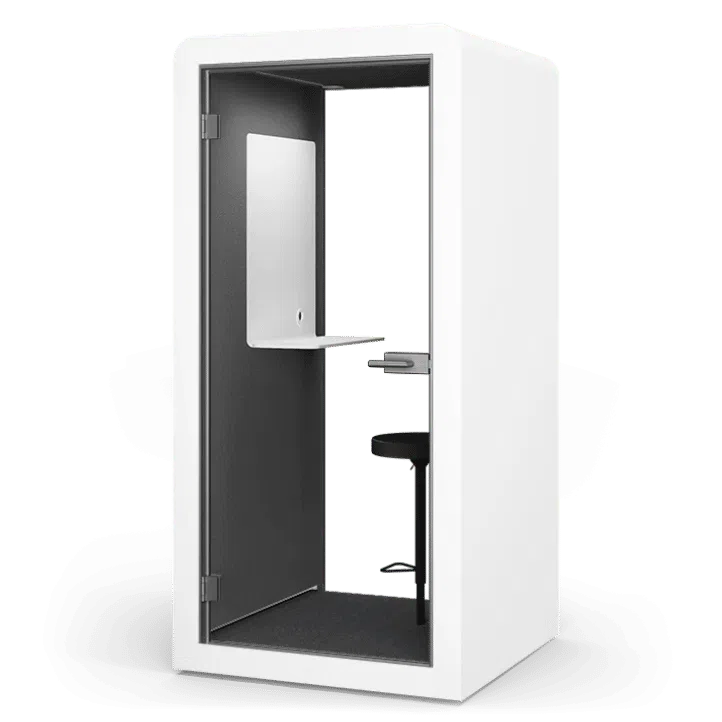
Hire Call Pod
$499.00 -
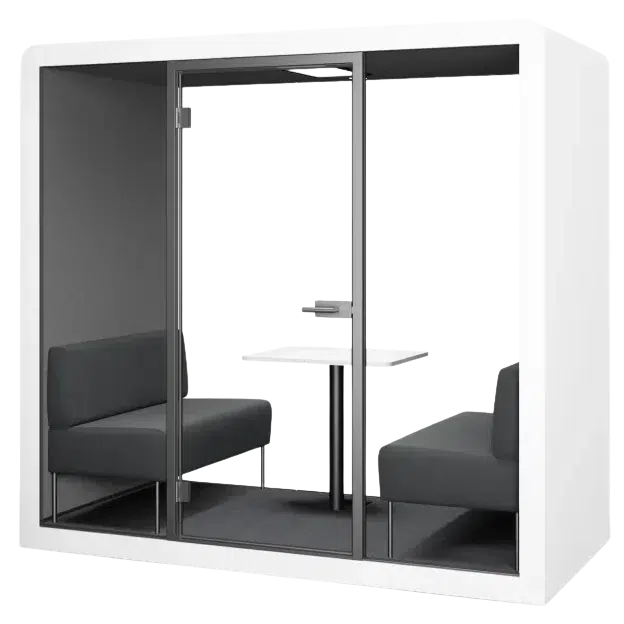
Hire Meeting Pod
$749.00 -

Hire Work Pod
$599.00
Reduced Manufacturing Demand
Extending product life doesn’t just reduce waste — it reduces manufacturing demand upstream.
When pods cycle through rental fleets rather than being bought and discarded, fewer new units need to be produced to meet market demand. That means:
- Less raw material extraction (steel, foam, glass, fabric)
- Less energy consumed in production and finishing
- Fewer emissions from manufacturing facilities and component supply chains
- Less packaging and shipping waste from new-unit delivery
The environmental benefit compounds over time. A rental fleet serving 100 customers over five years requires significantly fewer total units manufactured than a purchase model serving the same number of customers — because the same pods are doing more work.
Smarter Use of Resources Across the Economy
There’s a broader principle at work here that goes beyond any single company’s carbon footprint: shared use is inherently more efficient than individual ownership.
An acoustic pod sitting unused in an office because a team is working remotely this quarter, or because a startup downsized, or because a lease ended — that’s a resource sitting idle. The manufacturing impact has already occurred, but the utility isn’t being realized.
In a rental model, pods are matched to active demand. When one customer no longer needs a unit, it moves to another who does. Utilization stays high. The ratio of environmental cost to productive use improves significantly.
This is the same logic behind why car-sharing reduces total vehicles on the road, or why library systems reduce total books printed. Shared access models extract more value from what’s already been produced.
The Carbon Case for Renting vs. Buying
Let’s make this concrete. Consider two companies, each needing one acoustic call pod for their office:
Company A buys a pod. They use it for three years, then close their office and dispose of it. The pod goes to landfill. Total useful life: 3 years. Total manufacturing impact: fully attributed to one buyer.
Company B rents a pod from PodRent. After 18 months, they move to a larger space and return the pod. PodRent refurbishes it and rents it to Company C, then Company D. The same pod is still in active use seven years later. Total useful life: 7+ years and counting. Manufacturing impact: distributed across multiple users, with no new unit needed.
The math isn’t complicated. Longer life, lower waste, less manufacturing demand — renting wins on every metric.
Sustainability Is Built Into the Rental Agreement
One of the underappreciated advantages of renting is that sustainability becomes structural rather than aspirational. You don’t have to remember to recycle the pod responsibly when you no longer need it. You don’t have to find a buyer or a disposal service. You simply return it, and the provider takes responsibility for what comes next.
For companies with sustainability reporting requirements — ESG commitments, Scope 3 emissions tracking, or green office certification programs — this matters. Choosing rental over purchase removes a waste liability from your balance sheet and replaces it with a clean, documented return process.
It also makes it easier to right-size. Renting means you can scale your pod footprint up or down as your team changes, rather than being stuck with hardware you no longer need. Fewer unused assets means less embedded carbon sitting idle.
A Simple Choice With a Real Impact
Sustainability in the workplace doesn’t always require a major initiative or a capital investment. Sometimes it’s a procurement decision: choosing to rent rather than buy, choosing a provider with a circular model, choosing products that stay in use rather than ending up in a skip.
Renting an acoustic pod from PodRent is one of those decisions. Our fleet is built to last, maintained to stay in service, and never destroyed — because keeping pods in circulation is the point.
If you’re ready to add a quiet, private workspace to your office without the environmental cost of ownership, explore our rental range or talk to our team about the right fit for your space.
Sustainability isn’t just a target — it’s a shared commitment. Choosing to rent with PodRent is a simple yet impactful way to support the environment, make better use of resources, and reduce your overall footprint.